Commercial Rooftop HVAC Services in Stockton, California
Dependable Rooftop Package Unit Repairs and System Replacements
Maintaining comfortable indoor conditions is essential for keeping employees productive and customers comfortable. Commercial rooftop HVAC services deliver comprehensive repair, routine maintenance, and equipment replacement for rooftop package units. We inspect industrial cooling and heating setups to restore balanced airflow, fix mechanical issues promptly, and minimize business disruptions so your commercial facility operates smoothly year-round.
Common Rooftop HVAC Problems We Diagnose and Fix
Identifying rooftop HVAC failures early prevents unexpected climate control outages, protecting your business operations and equipment investment.
Uneven Cooling Across Business Zones
Faulty dampers, clogged coils, or failing economizers prevent consistent temperature control across commercial work spaces.
Unit Fan Motor and Belt Failures
Heavy industrial use causes blower belt wear and motor strain, resulting in weak or nonexistent airflow.
Water Leaks and Roof Drain Blocks
Blocked condensate drain lines on rooftop units can cause water to back up and damage roofing structures.
Refrigerant Leaks in Commercial Units
System leaks lower cooling capacity, forcing commercial compressors to run constantly and draw excess power.
Thermostat and Automation Disconnects
Communication faults between central building controls and rooftop units disrupt automatic heating and cooling schedules.

Our Commercial Rooftop HVAC Process
Commercial System Evaluation
We inspect rooftop units, electrical contacts, economizers, and duct connections to locate mechanical or operational faults accurately.
Clear Service Recommendations
We outline straightforward repair or replacement options and explain component requirements clearly before starting any rooftop work.
Precision Rooftop Service
Our team replaces faulty industrial components, cleans commercial coils, and secures mechanical connections using durable equipment.
Operational Testing & Balancing
We test the unit through heating and cooling cycles to verify proper air volume, safety controls, and thermostat integration.
Why Businesses Count on Our Commercial HVAC Team
Customer First
Clear Communication
Licensed Technicians
Quality Workmanship
Experienced Care
Upfront Pricing
Prompt Response
Local Expertise
Excess humidity indoors
Uneven cooling throughout the home
Warning Signs Your Commercial Rooftop Unit Needs Attention
Temperature variations between office zones or retail areas
Unexplained spike in monthly commercial power bills
Strange grinding, rattling, or squealing from the roof
Water marks or ceiling leaks below rooftop equipment
Unit struggles to reach set building temperatures
System frequently trips electrical breakers on startup
Deciding Between Commercial Unit Repair and Full Replacement
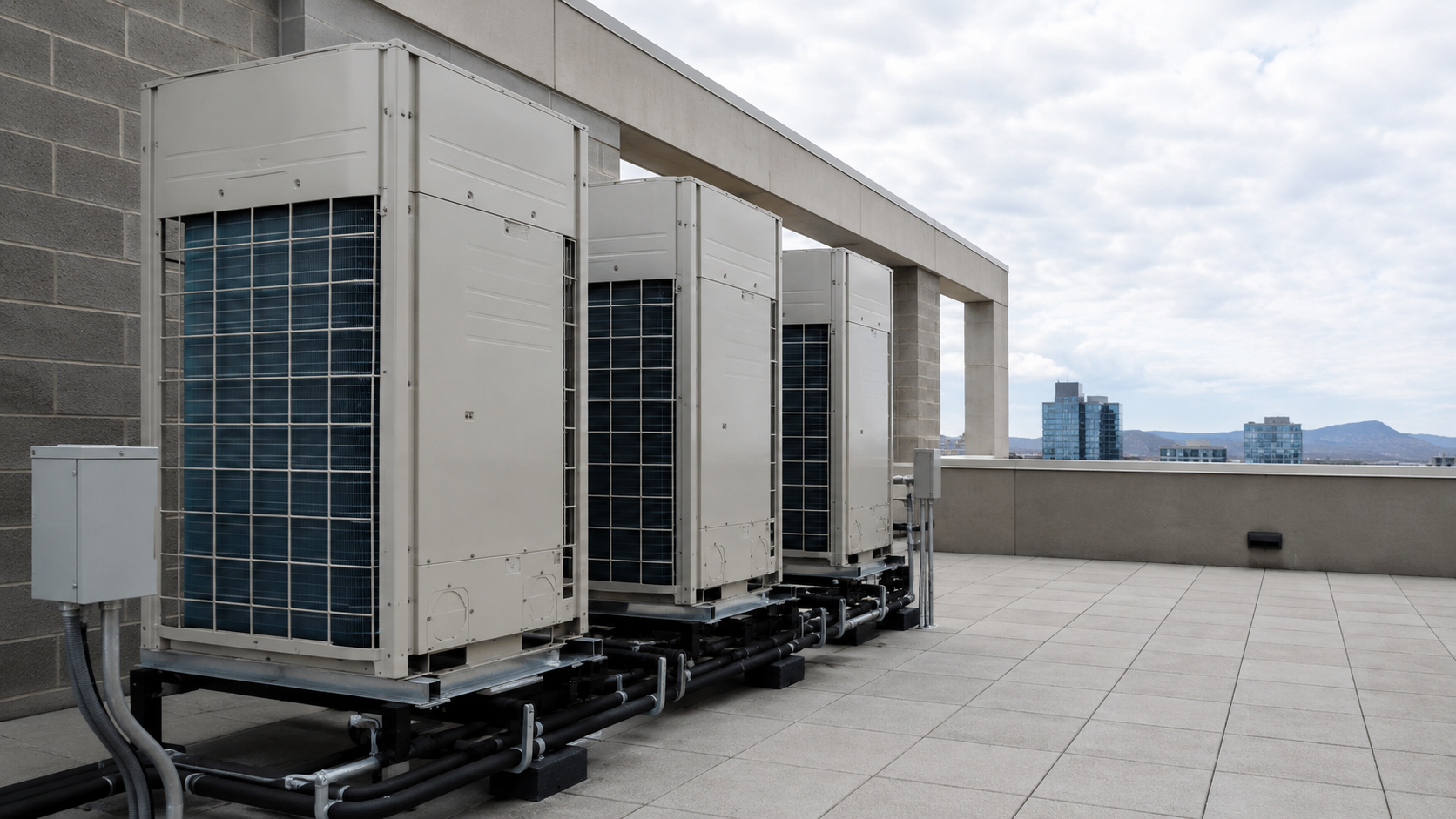
Choosing whether to repair a rooftop unit or install a new commercial packaged system depends on equipment age, overall efficiency, and ongoing maintenance demands. For systems under ten years old, replacing targeted components like fan motors or relays provides a fast, cost-effective fix. However, if your rooftop equipment requires repeated service calls, relies on outdated refrigerants, or causes persistent energy spikes, upgrading to a high-efficiency commercial unit helps lower operating costs and protects your business from unexpected downtime.
Frequently Asked Questions About Commercial Rooftop HVAC
What is a commercial rooftop HVAC package unit?
A rooftop package unit combines all heating and cooling components, including compressors, coils, and blowers, into a single cabinet located on a building roof. Placing equipment outdoors saves interior floor space and allows technicians to perform service visits without disrupting daily indoor business operations.
How long does a commercial rooftop unit repair or replacement take?
Routine diagnostic evaluations and minor part repairs usually take two to three hours. Complete rooftop unit replacements are typically planned and completed within a single day to minimize operational downtime. Your technician will outline the exact schedule prior to starting installation.
Why are commercial rooftop HVAC maintenance checks important?
Rooftop units are exposed to direct weather, dust, and outdoor extreme temperatures year-round. Regular maintenance catches worn belts, dirty coils, and clogged condensate drains early, preventing sudden system failures during peak operating hours and helping lower monthly energy expenses.
What causes rooftop units to leak water into the building?
Water leaks usually occur when rooftop condensate drain lines become clogged with dirt, algae, or environmental debris. As condensation accumulates without proper drainage, water overflows the drain pan and can seep through roof penetrations into ceiling spaces below.
How often should commercial rooftop air filters be replaced?
Commercial HVAC air filters should be checked monthly and replaced every 30 to 60 days depending on local dust levels and building occupancy. Clean filters protect blower motors, maintain proper airflow, and keep commercial indoor air clean.
What should I check if our commercial unit stops cooling?
Verify that your central building thermostat settings are correct and confirm that main electrical switches or sub-panel breakers have not tripped. If basic controls are functioning correctly, schedule a professional diagnostic check to inspect rooftop components safely.